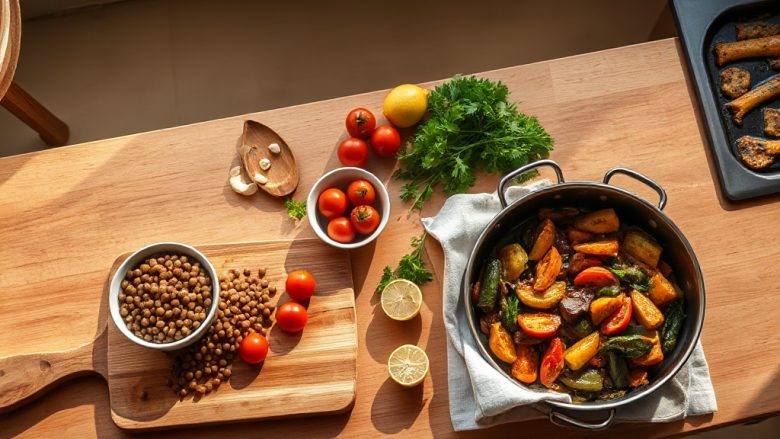
Most worries about vegetarian cooking are smaller than they feel. I’ve been cooking this way for years, and the same handful of questions come up every time a friend decides to eat less meat. So instead of a long lecture, here are plain answers to the things people actually ask. Think of this as vegetarian cooking questions answered simply, one at a time, with no guilt and no fancy equipment required.
Do I Need to Buy Special Ingredients?
No, and this is the first thing I tell anyone who’s nervous. You can cook a huge range of vegetarian meals with what’s already in a normal kitchen: onions, garlic, tinned tomatoes, beans, lentils, rice, pasta, potatoes, and whatever vegetables looked good that week. The cuisines of the world have been doing this for centuries, so the recipes exist without you hunting down anything rare.
That said, a few pantry items do make life easier. Smoked paprika, cumin, soy sauce, and a decent stock cube turn plain vegetables into something you’ll want to eat again. Buy them slowly as you need them rather than clearing a shelf on day one. A practical aside: if a recipe calls for a specialty ingredient you can’t find, it’s almost never load-bearing. Swap in something similar or leave it out.
Where Does the Protein Come From?
Beans, lentils, chickpeas, tofu, tempeh, eggs if you eat them, dairy if you eat it, nuts, seeds, and whole grains. That’s the honest list, and it’s longer than most people expect. You don’t need to combine anything in a precise way at every meal, which is an old idea that refuses to die. Eat a reasonable variety across the day and you’re fine.
For dinner, my default is a bean or lentil dish plus a grain plus a vegetable. That covers protein, carbs, and something green without any math. If you’re active or lifting weights, add a bit more tofu, Greek yogurt, or eggs and don’t overthink the numbers. A practical aside: a tin of chickpeas contains roughly the protein of a small chicken breast, so a chickpea curry is not a light meal.
Will I Feel Hungry an Hour Later?
Only if you ate vegetables alone. The trick is pairing them with something that sticks to your ribs: beans, lentils, eggs, cheese, nuts, or a starchy base like potatoes, rice, or bread. A plate of steamed broccoli is a side dish, not a dinner, no matter how virtuous it looks.
Fat helps too, and it’s the part beginners skip. A drizzle of olive oil, a handful of nuts, or some full-fat yogurt makes a meal satisfying in a way that low-fat everything never does. A practical aside: if you’re hungry soon after eating, you probably under-seasoned, under-salted, or left out the fat. Fix one of those before you blame the diet.
How Do I Make Vegetables Actually Taste Good?
Heat, salt, fat, and acid. That’s the whole secret, and it applies to almost every vegetable you can name. Roast them at a higher temperature than you think, salt them properly, add oil, and finish with a squeeze of lemon or a splash of vinegar. Suddenly the same broccoli that bored you tastes like something from a restaurant.
Don’t boil vegetables into submission. If you’re steaming, keep them bright and slightly firm. If you’re roasting, give them room on the tray so they brown instead of sweating. A practical aside: a hot oven at around 220C does more for cauliflower than any sauce you could pour on it.
Can I Just Leave the Meat Out of a Recipe?
Sometimes, but not always. In a stew, curry, or pasta sauce, yes, you can usually drop the meat and add beans, lentils, or mushrooms. In a roast or a dish where the meat is the entire point, removing it leaves you with a sad plate of sides. Better to pick a recipe that was vegetarian to begin with.
When you do swap, remember the meat was carrying flavour and texture. Replace both. Mushrooms give the savoury depth, lentils give the body, and a little soy sauce or tomato paste brings the richness back. A practical aside: if a dish tastes flat after you remove the meat, it usually needs salt, acid, or something umami, not more vegetables.
What About Eating Out and Family Dinners?
Eating out is easier than it used to be, but you still need a plan. Look at the menu before you go, and have two or three safe options in mind. Most places will make a vegetarian version of something if you ask plainly and without apologising for it. Indian, Thai, Middle Eastern, and Italian restaurants are usually the friendliest ground.
Family dinners are more about people than food. Bring a dish you’re happy to eat, share it, and don’t turn the table into a debate. If someone asks why you’re not having the roast, a short honest answer works better than a lecture. A practical aside: being the person who brings a genuinely good vegetarian dish changes more minds than any argument.
How Do I Start Without Getting Overwhelmed?
Pick one meal a day and make it vegetarian for a week. Breakfast is the easiest: porridge with nuts, beans on toast, or yogurt with fruit. Once that feels normal, add another meal. Small changes stick; total overhauls usually don’t.
Keep a short list of five meals you already like that happen to be vegetarian. Pasta with tomato sauce, bean chilli, lentil soup, stir-fried tofu with rice, and a big salad with cheese and seeds will carry you a long way. A practical aside: cook double and eat the leftovers for lunch. It removes the daily decision, which is where most people give up.
Frequently Asked Questions
Do I need to take supplements if I eat vegetarian?
Not automatically, but vitamin B12 is the one to watch if you eat no animal products at all. If you eat eggs or dairy, you’re likely getting some. Iron and omega-3 are worth a look too, and a doctor or dietitian can tell you what you actually need rather than guessing.
Is vegetarian cooking more expensive?
Usually less, not more. Beans, lentils, rice, oats, and seasonal vegetables are among the cheapest things in any shop. The cost creeps up when you buy a lot of processed meat substitutes, which are convenient but pricey. Cook from basic ingredients and your weekly bill often drops.
Can I freeze vegetarian meals?
Yes, and most of them freeze beautifully. Soups, curries, chilli, lentil stews, and bean burgers all freeze well for a couple of months. Tofu can go a bit spongy after freezing, so add it fresh where you can. Cool everything properly before it goes in the freezer.
How long does cooked vegetarian food keep in the fridge?
Three to four days for most cooked dishes, kept in a sealed container. Rice is the one to be careful with; cool it quickly and eat it within a day. If in doubt, trust your nose and throw it out. Nobody ever regretted binning questionable leftovers.
Do I have to like tofu to eat vegetarian?
No. Plenty of vegetarians never cook it. Beans, lentils, eggs, cheese, nuts, and grains can cover everything. If you do want to try tofu, press it, season it, and fry it until golden. Undercooked, unseasoned tofu is why people think they hate it.
None of this is complicated once you stop treating it like a test. Cook food you actually want to eat, keep a few reliable meals in rotation, and adjust as you go. That’s really all vegetarian cooking asks of you.