Cheap decor fails when it’s spread thin. A tenner spent on six small things leaves a room looking exactly the same as before, just slightly busier. One deliberate change, chosen well, can make a whole room read differently the moment you walk in. That’s the test I use now, after furnishing a flat almost entirely from charity shops, car boot sales and the odd skip-adjacent find: not how little something costs, but how much visible difference it buys per pound. The budget friendly home decor ideas below are ranked on exactly that basis, from the near-free moves up to the ones worth saving for. Each tier tells you what it costs, what it actually changes, and the one caveat that tends to catch people out.
Under £10: Near-Free Moves That Still Register
The cheapest tier is really about editing rather than buying. Clearing every surface down to the wood and then putting back only the things you genuinely like costs nothing and changes a room more than most purchases. A cluttered mantel and a bare one are two different rooms, even with identical furniture underneath. Do the same with one wall: take everything off it, then rehang only the pieces that earn their place. You’ll often find you need fewer hooks, not more.
Rearranging counts here too. Pulling a sofa away from the wall by thirty centimetres, or swapping which corner the lamp lives in, shifts how light moves through the space. It’s free, it’s reversible, and it’s the single most underrated move on this list. The caveat is that it only works if you actually commit to the new layout for a week before judging it. Half-hearted shuffling that gets undone by Tuesday doesn’t count.
One more: wash the windows and swap your bulbs to warm white if they aren’t already. Grim, cool light makes even good furniture look like a waiting room. Warm bulbs cost a few pounds each and flatter everything in the room, including the paint you were thinking of replacing.
£10 to £50: Small Buys With Outsized Impact
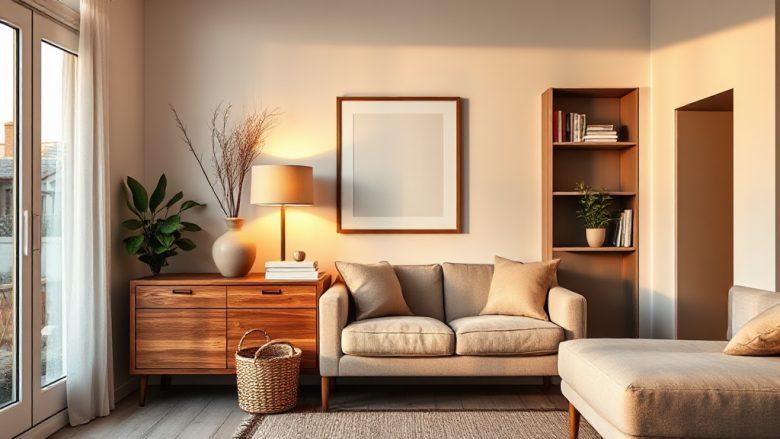
This is the sweet spot for budget friendly home decor ideas, because it’s where you can buy something substantial without agonising over it. Top of the tier is a decent second-hand lamp. Lighting does more for atmosphere than any cushion, print or plant, and a good shade in a warm bulb temperature makes a corner feel intentional. Charity shops and online marketplaces are full of solid brass and ceramic bases for the price of a takeaway. The caveat: check the flex and plug before you hand over money, and budget a few pounds for a replacement cable if it looks frayed.
Next, textiles in one colour family. A throw, a couple of cushion covers and a runner bought in the same muted tone will tie a room together far more convincingly than five mismatched statement pieces. This is where cheap tips over into cheap-looking: too many patterns, too many colours, no through-line. Pick one or two tones and repeat them. It reads as considered rather than sparse.
A large framed print or poster is the third move in this tier, and the trick is the frame, not the art. A big second-hand frame with a simple mount makes an inexpensive print look like it belongs. Small pictures hung in a scattered cluster look like a student flat; one large piece centred over a sofa or bed looks deliberate. Caveat: measure the wall before you buy, because an oversized frame in a small room can overwhelm it just as easily as a tiny one can disappear.
Finally, a proper doormat and a decent doorknob or handle swap. It sounds trivial. It isn’t. The first thing anyone touches when they walk in sets the tone for everything after, and worn brass or a flimsy handle undermines a room you’ve otherwise sorted.
£50 to £150: The Moves That Change How a Room Reads
At this level you’re buying visible change, not just polish. The strongest spend is paint, and specifically painting one wall or one alcove rather than the whole room. A single deep colour behind a bed or a bookshelf creates depth, frames the furniture and costs roughly the price of a tin and a roller. It also hides uneven walls better than white does. Caveat: test the colour on a large patch and look at it at night as well as in daylight, because a shade that sings at noon can turn muddy under a warm bulb.
Second in this tier is a rug that’s actually the right size. Most people buy too small, and a postage-stamp rug floating in the middle of a floor makes a room look unfinished no matter what else you do. A rug that at least reaches under the front legs of your sofa or bed anchors the whole layout. Second-hand wool rugs are widely available and wear far better than cheap new synthetics. Caveat: measure the floor space properly and accept that a slightly stained wool rug in the right size beats a pristine one in the wrong size every time.
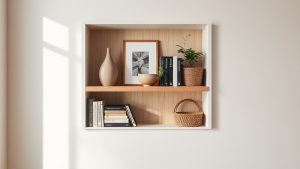
Third, shelving and storage that doubles as display. A simple open shelf or a second-hand cabinet lets you group books, bowls and plants so the room looks curated instead of cluttered. The caveat here is discipline: open storage only works if what’s on it is chosen, not just dumped. If you can’t keep it edited, buy something with doors and save yourself the daily battle.
£150 and Up: Where to Spend If You Only Spend Once
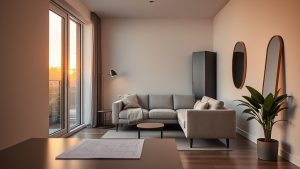
If you’re going to make one larger purchase, make it the thing you touch or look at every single day. A comfortable armchair from a charity furniture shop, a solid wood dining table, or a properly sized mirror are all worth the wait and the saving. A large mirror in particular changes a room’s sense of space and light more than almost anything else at this price, and second-hand ones with real frames cost a fraction of new. Caveat: check the glass for desilvering along the edges, and measure the wall before you commit, because a mirror that’s too small does nothing and one that’s too large can dominate.
The other justified spend is a single piece of original art or a handmade object, bought because you actually like it. One real thing among inexpensive ones lifts the whole room. It doesn’t need to be expensive, just genuine. Caveat: don’t buy it to fill a gap. Buy it because you’d want it even if you moved tomorrow.
Worth saying plainly: this tier is optional. Plenty of rooms look excellent on nothing but the first two tiers plus one good lamp. Spending more only helps if the cheaper moves are already in place.
Skip These: Cheap Moves That Cost More Than They’re Worth
Some budget decor actively works against you. Matching sets of small accessories bought all at once make a room look like a catalogue page rather than a home, and they date fast. Peel-and-stick tiles and wallpaper in high-traffic or damp areas tend to lift at the edges within months, and the repair job costs more than doing it properly would have. Tiny decorative items bought to fill shelves create dusting work and visual noise in equal measure. And anything you buy purely because it was reduced, rather than because it fits the room, is money spent to make the space slightly worse. The discipline that makes budget decor work isn’t thrift for its own sake. It’s buying fewer things, choosing them properly, and letting one good change do the work of five forgettable ones.