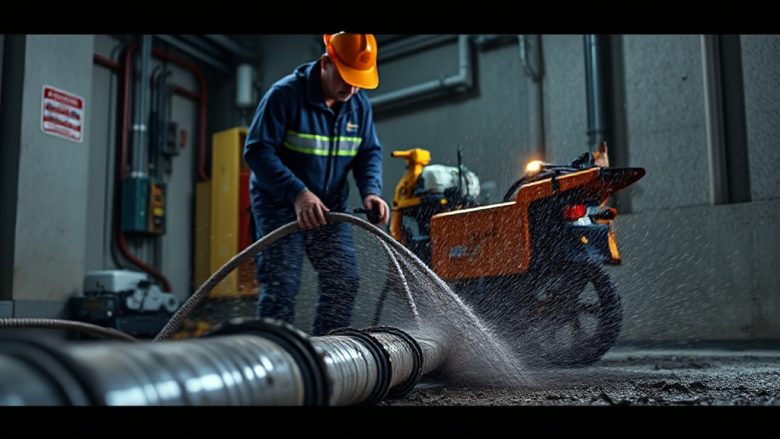
The Tools Behind a Professional Drain Unclogging in Vila Buarque
A clogged drain is not unlike a repair job where the right tool decides the outcome. A homeowner with a plunger can sometimes win the fight against a slow sink, but a backed-up sewer line in a busy Vila Buarque building needs a different class of equipment entirely. The difference between a temporary fix and a lasting solution usually comes down to what the technician brings through the door.
This article looks at the tool families that professional teams rely on when they respond to a call for a desentupidora em Vila Buarque São Paulo SP. We will cover hand augers, motorized cables, hydro-jetting machines, and inspection cameras, then explain how a technician matches the tool to the blockage.
Why Tool Choice Matters More Than Brute Force
Many clogged drains are made worse by the wrong tool. A plunger applied to a grease-choked kitchen line can push waste deeper into the pipe. A chemical drain cleaner poured into a standing toilet can damage seals and create a hazardous splash risk. Professionals avoid these outcomes by diagnosing the blockage before reaching for equipment.
The first step is usually a visual check and a few questions: where does the water back up, how many fixtures are affected, and has anything unusual been flushed or poured down the drain? From there, the technician selects a tool family based on pipe diameter, blockage location, and the material involved. Matching the tool to the blockage is the single most important decision in a drain call.
Hand Augers and Manual Snakes: The Small-Scale Workhorses
Not every clog requires a truck-mounted machine. Hand augers, also called drum augers or manual snakes, are the first line of defense for sinks, tubs, and small floor drains. They consist of a flexible steel cable coiled inside a drum, with a crank handle or a small motor that feeds the cable into the pipe.
When a Hand Auger Is the Right Call
A hand auger works best on blockages close to the fixture, typically within the first few meters of pipe. Hair clogs in a bathroom sink, soap scum in a shower drain, and small food scraps in a kitchen line are classic candidates. The cable is stiff enough to break through soft obstructions but flexible enough to navigate the bends of a standard trap.
Technicians choose the cable head based on the material. A straight auger tip is used for general pushing, while a corkscrew or bulb head is better for grabbing hair and fibrous waste. The limitation is reach and torque: a hand auger will not clear a main line blockage 20 meters out, and forcing it can kink the cable or damage older pipes.
What a Manual Snake Cannot Do
Manual snakes struggle with hard scale, roots, and heavy grease. They also provide no way to verify that the pipe is fully clear. For these reasons, a professional desentupidora Vila Buarque will often use a hand auger only as a first attempt on a small fixture, then escalate to motorized equipment if the water does not run freely.
Motorized Drain Cables: Power for Stubborn Blockages
When a blockage sits deeper in the line or resists manual effort, motorized drain cables take over. These machines use an electric motor to rotate a heavy-duty cable, generating far more torque than a hand crank. They come in sectional and continuous-feed designs.
Sectional machines use cables in fixed lengths that are added one section at a time. They are common for larger drain lines and can reach further than a single continuous cable. Continuous-feed machines, often called drum machines, hold a long cable on a reel and feed it smoothly into the pipe. Both types accept a range of cutting heads: blades for roots, chain knockers for scale, and boring tools for grease.
Motorized cables are the standard tool for main-line blockages in residential and commercial buildings. They can clear a 100 mm sewer line or a 50 mm branch line, depending on the cable size. The technician controls the feed rate carefully to avoid binding the cable or putting stress on older clay or cast-iron pipes.
Safety and Skill Requirements
A motorized cable is not a consumer tool. The rotating cable can cause serious injury if it catches on clothing or gloves, and a cable that suddenly frees itself can whip violently. Professional teams wear heavy gloves, eye protection, and use the machine according to its torque limits. This is one reason why a desentupidora Vila Buarque São Paulo SP brings trained operators rather than renting a machine to the homeowner.
Hydro-Jetting: High-Pressure Cleaning for Grease and Scale
Hydro-jetting uses a high-pressure water stream, often between 1,500 and 4,000 PSI, to scour the inside of a pipe. A specialized nozzle is fed into the line on a hose, and the water jets point backward to pull the nozzle forward while blasting the pipe wall. This is the tool of choice for grease buildup, soap residue, and mineral scale.
How Hydro-Jetting Differs from Cabling
A cable punches a hole through a blockage; a hydro-jetter cleans the entire pipe wall. That distinction matters in commercial kitchens and older buildings where grease and scale line the pipe like plaque in an artery. Cabling may restore flow temporarily, but the residue remains and catches debris again. Hydro-jetting removes the residue, restoring the full diameter of the pipe.
The technique requires careful pressure control. Too much pressure on a fragile pipe, such as old clay or thin-walled plastic, can cause damage. Technicians assess pipe material and condition before choosing a nozzle and pressure setting. In many cases, a camera inspection comes first to confirm the pipe can handle the treatment.
Where Hydro-Jetting Fits in a Maintenance Plan
For restaurants, condominiums, and any building with a history of repeat clogs, hydro-jetting is often scheduled as preventive maintenance. Clearing grease before it hardens is far cheaper than dealing with a sewer backup during business hours. It is also the standard method for clearing roots after a cable has cut them, because the water flushes the debris downstream.
Inspection Cameras: Seeing the Problem Before Choosing the Tool
A drain camera is a small, waterproof video unit on the end of a flexible rod. It sends a live feed to a monitor, allowing the technician to see the inside of the pipe in real time. Cameras do not clear blockages, but they change how every other tool is used.
Before treatment, a camera confirms the location and nature of the blockage. Is it grease, roots, a collapsed pipe, or a foreign object? After treatment, the camera verifies that the line is truly clear and that no damage was caused. This verification step is what separates a professional job from a guess.
Camera inspection turns a blind repair into a targeted one. A technician who sees a root intrusion at a specific joint can choose the right cutting head and avoid unnecessary work elsewhere in the line. For property managers, the recorded footage also provides documentation for insurance claims or future maintenance planning.
What the Camera Reveals That Other Tools Cannot
Some blockages are not blockages at all. A bellied pipe, a separated joint, or a protruding tap fitting can mimic a clog while actually requiring a repair rather than a cleaning. Without a camera, a technician might cable the line repeatedly with no lasting result. With a camera, the correct decision is clear: clean, repair, or replace.
Matching the Tool to the Blockage: A Practical Guide
The table below summarizes how professionals typically match equipment to common drain problems. It is a simplification, since every job requires judgment, but it illustrates the decision logic.
| Blockage Type | Typical First Tool | Follow-Up or Alternative |
|---|---|---|
| Hair or soap scum in a sink or tub | Hand auger | Small motorized cable if deep |
| Grease in a kitchen line | Motorized cable with grease head | Hydro-jetting to clean the pipe wall |
| Roots in a main sewer line | Motorized cable with root cutter | Hydro-jetting, then camera verification |
| Scale or mineral buildup | Hydro-jetting | Camera inspection to confirm pipe condition |
| Unknown or recurring blockage | Camera inspection first | Tool choice based on findings |
Notice that the camera appears in several rows. In practice, an experienced technician may use two or three tools on a single job: a cable to break the main obstruction, a jetter to clean the line, and a camera to confirm the result. Each tool has a specific role, and skipping a step often leads to a callback.
For residents and building staff in Vila Buarque, the practical takeaway is simple. A drain that clears and stays clear was probably treated with the right combination of equipment. A drain that clogs again within weeks may have been punched open but not cleaned, or may have an underlying defect that only a camera can reveal. When the stakes are a flooded kitchen or a backed-up basement, the tool selection is not a detail. It is the job.